
A Very Good View
Beauregard | Rhône Blanc | Fresh Morgon

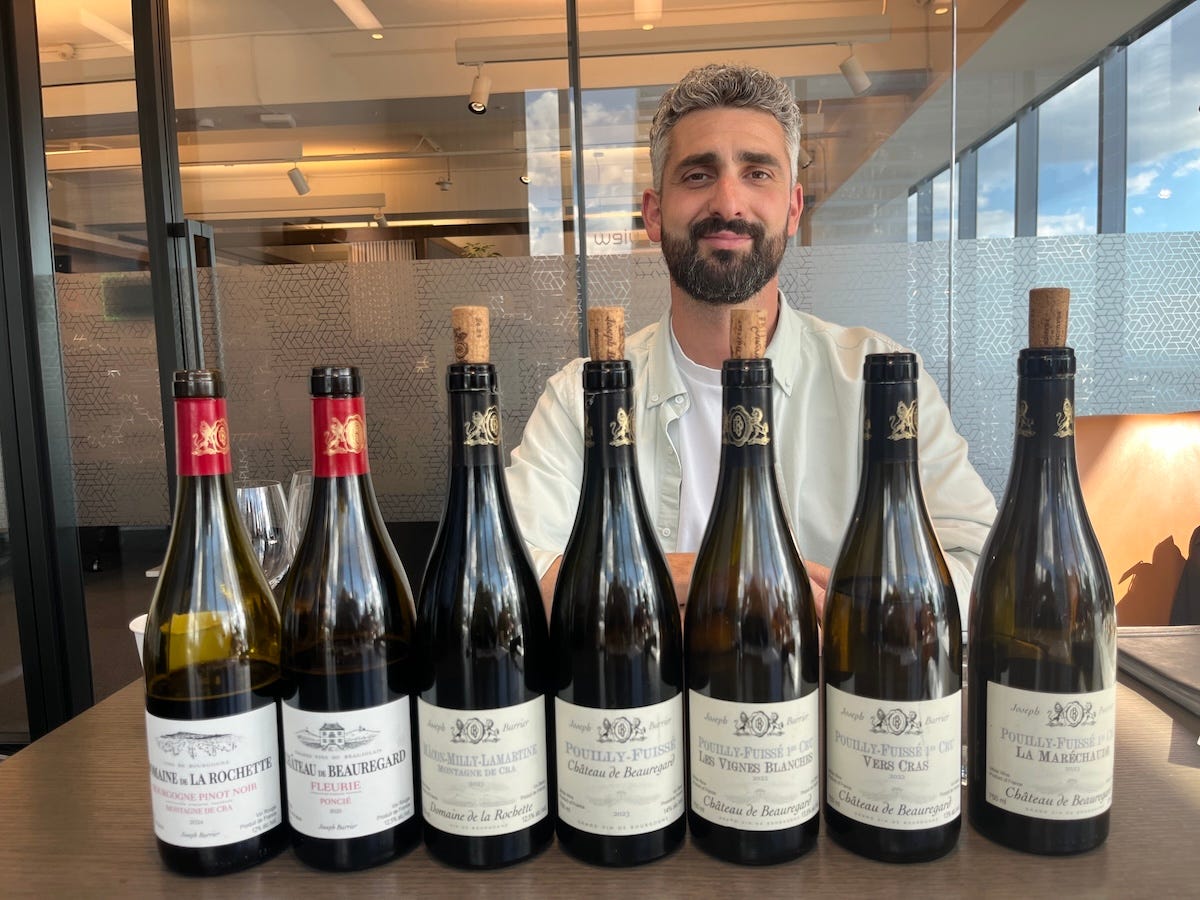
This week, Baptiste Burrier and I determined that we had met before, or at least met eyes across a table. This would have been while I extended greedily the tasting glass in my hand looking for a pour of Château Beauregard Pouilly Fuissé at a tasting a couple years ago in the Chapelle de l’Oratoire in Beaune. I was a day or so into the Les Grands Jours de Bourgogne series of tastings, and beginning to acclimatize to periodically having my mind blown. It was the last tasting of the day, and was operating more like a party, with pours of the Southern Burgundy’s most famous wine going back 50 years to 1974.
There would have also been Premier Cru Pouilly Fuissé, but only younger vintages, since the designation was only given to the 22 prime vineyard sites in Poulliy Fuissé for the 2020 vintage and on. Baptiste’s father, Frédéric-Marc Burrier, led the charge to have the appellation designate the classification, as he was the head of the syndicate of producers at the time. It was a long fight to correct what had been a 77 year oversight.
This contemporary account of why Pouilly Fuissé initially missed out on Premier Cru classfication, from SevenFifty Daily, shows how history is always part of terroir:
According [Frédéric-Marc Burrier], Pouilly-Fuissé’s lack of premier crus stems from German occupation in World War II. In the 1940s, Germans could requisition ordinary wines, but they were forced to pay for classified ones, spurring Burgundy’s appellations in occupied France to submit a list of climats that could be classified as premier cru (therefore requiring payment for these wines). Because Mâconnais was further south in non-occupied France, they did not submit any climats to be considered for premier cru status. In fact, this is the first addition of premier cru vineyards in Burgundy since 1943.
Not that the Burriers are stuck in the past. Baptiste is describes the Mâconnais as Burgundy’s “rising star”, and credits all level of producers from the local co-operatives to Premier Cru family’s for increasing interest and demand for Southern Burgundian wine. In fact, the first wine we tasted wasn’t Pouilly Fuissé, but a Mâcon Villages: the 2023 Joseph Burrier Domaine de la Rochette Mâcon-Milly-Lamartine Montagne de Cra. Cra refers to the heavy presence of limestone on this 400 metre high slope. It was a classic fancy Burgundian Chardonnay: deep yellow and weighted in the mouth, but bright with lemon citrus notes and honeyed. It was really good, and while it lingered on my palate, Baptiste had no problem convincing me that Mâcon-Milly-Lamartine should be the next Mâconnais Premier Cru appellation.
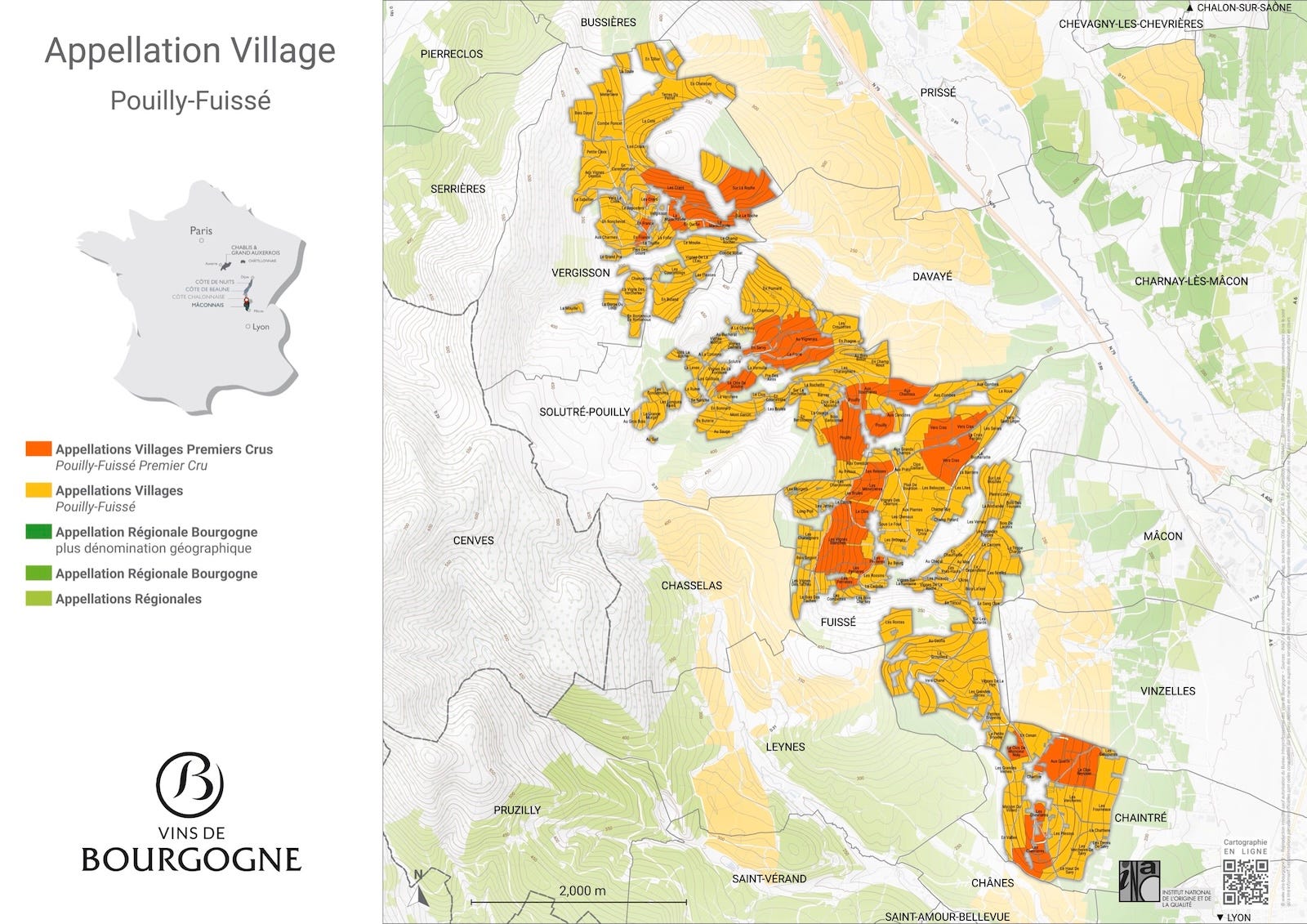
The next wine was the 2023 Joseph Burrier Château Beauregard Pouilly Fuissé, a blend from the Château’s sites around the small appellation. It was wonderfully fresh with a grapefruit citrus note that finished with a pleasing note of bitterness. Between the Montagne de Cra and the Pouilly Fuissé I could have happily left the tasting with a renewed confidence of the terroir and technique of the Mâconnais, but I was about to be evangelized because Baptiste Burrier brought out the big guns: three of the Beauregard Premier Crus.
The 2022 Joseph Burrier Château Beauregard Les Vignes Blanches Poully Fuissé 1er Cru, from a slope over the town of Fuissé struck me as a kind of Platonic ideal of Chardonnay. Unctuous and rich, but fresh with lemon curd and toasty notes, with a slight salinity on the finish. It was really lovely and what one imagines a big $100 a bottle white Burgundy would be. By contrast the 2022 Joseph Burrier Château Beauregard Ver Cras Poully Fuissé 1er Cru, from the vineyard around the cellar, followed the flavour profile of the first, but was a little leaner, and maybe a bit more mineral. If the Vignes Blanches wanted lobster, maybe it was more Sole Meunière. And, as if to prove that each of the Burrier climats really had its own personality the 2022 Joseph Burrier Château Beauregard La Maréchaude Vignes Blanches Poully Fuissé 1er Cru, from a south facing but 400 metre high slope, went into tropical fruits, with surprising notes of kiwi and passionfruit, not usually associated with the Chardonnay grape.
There’s no sub-appellation or classification for Mâconnais Pinot Noir, so the red the Burriers make at Domaine de la Rochette is simply Montagne de Cra Bourgogne Rouge. The 2024 we tasted showed as a classic cool climate Pinot, with bright red fruit (strawberries and raspberries), and a savoury or salty character. It showed harmonious balance and would have been easy to settle down at the table to drink a glass or two effortlessly.
The last wine was not from Mâcon, but was a Cru Fleurie wine from neighbouring Beaujolais, where the Burrier family has had a presence for generations. The vignerons of Fleurie are pushing the French wine authorities for a Premier Cru system, and Baptiste is confident that Poncié would be among the first lieu dits to acheive the classification, should it come. Indeed, the 2023 Joseph Burrier Château Beauregard Fleurie Poncié was a remarkably complex, dark fruited expression of Gamay, with fruit running from dark cherry to blueberry, and a hint of violet floral notes. Still grippy with tannins, I noted it would be fun to come back to it in a few years. Another rising star.
The Burrier family wines are represented in Ontario by Cru Wine Merchants, who arranged my meeting and tasting with Baptiste Burrier. Information on acquiring them is at their website, cruwinemerchants.com.
AWARD WINNING VINITALY VIDEO
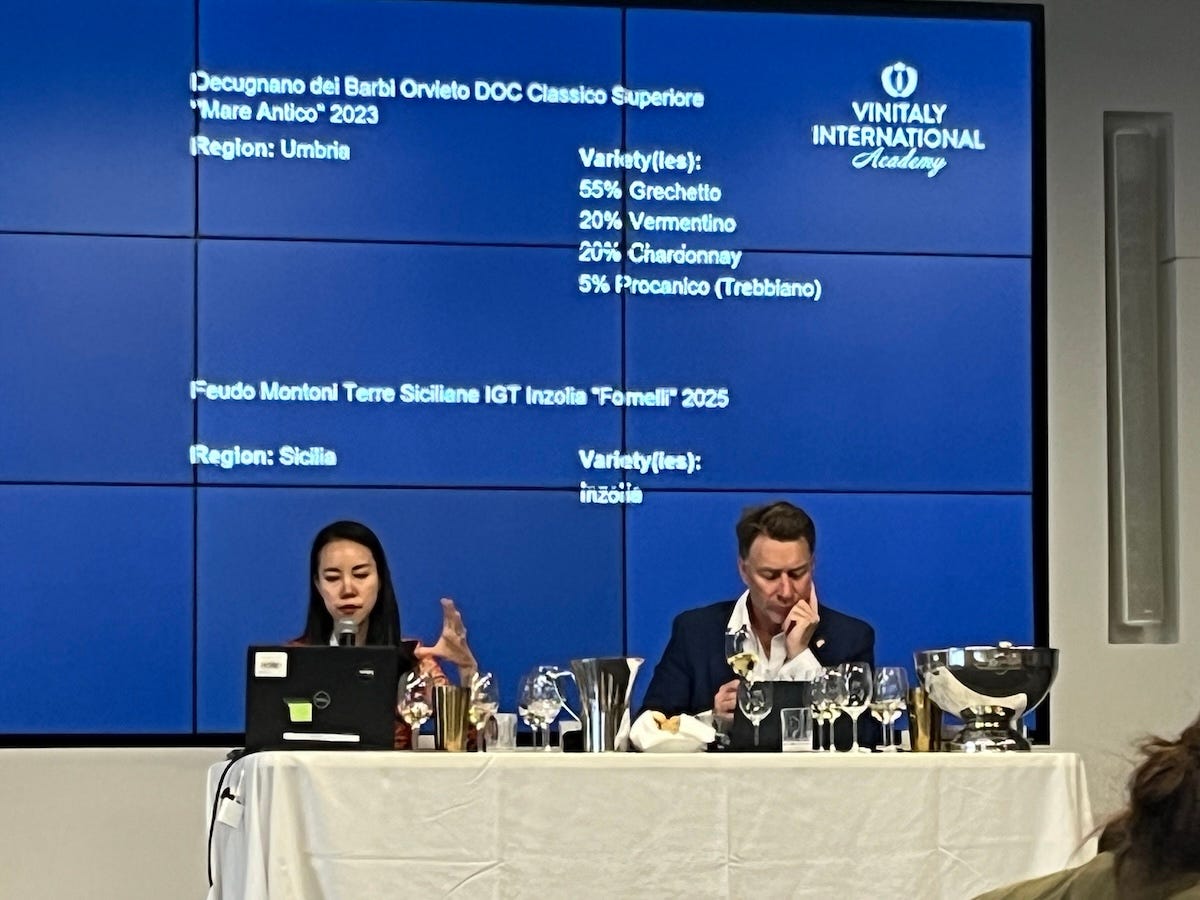
As I feared, I did not pass my exam this week to become a Vinitaly International Academy Ambassador, although 35 of the 55 of us who took the test did; see the full list here. Among the successful candidates to earn a pin were my fellow study group members Danielle Chandler and James Chatto.
Our fourth study group member was Renée Sferrazza, who was essentially the director of the video below and got the three of us organized to make it. The five minute video is actually a mandatory part of the exam, and must be submitted before the written tests. As VIA chief Stevie Kim explained, part of the VIA Ambassador requirement is to be able to communicate successfully about Italian wine.
Our video, From Alto Adige to Sicily: Wine, Food, and Regional Identity, won the award at Vinitaly Toronto 2026 for the best video submission and so, I thought, ought to be shared.
ZOOMER GIFT PIECE
I wrote a piece by mistake. I was asked for a few quotes for a Father’s Day piece by Zoomer Magazine and instead I just wrote a short piece because that’s how I procrastinate from writing the thing I am supposed to. Anyway, they accepted and ran it. It was posted just after the last MJ Wine Box went out, so I am linking to it too late for the day, but I think it hold’s up for a gift for any wine enthusiasts at any time, and I’d like as many people to read it as possible. Check it out here.
MJ Wine Box is a subscriber supported venture. If you’re not already a paid subscriber to the MJ Wine Box Substack, consider upgrading now, and receive a discount of 20% for life.
WINE RECOMMENDATIONS
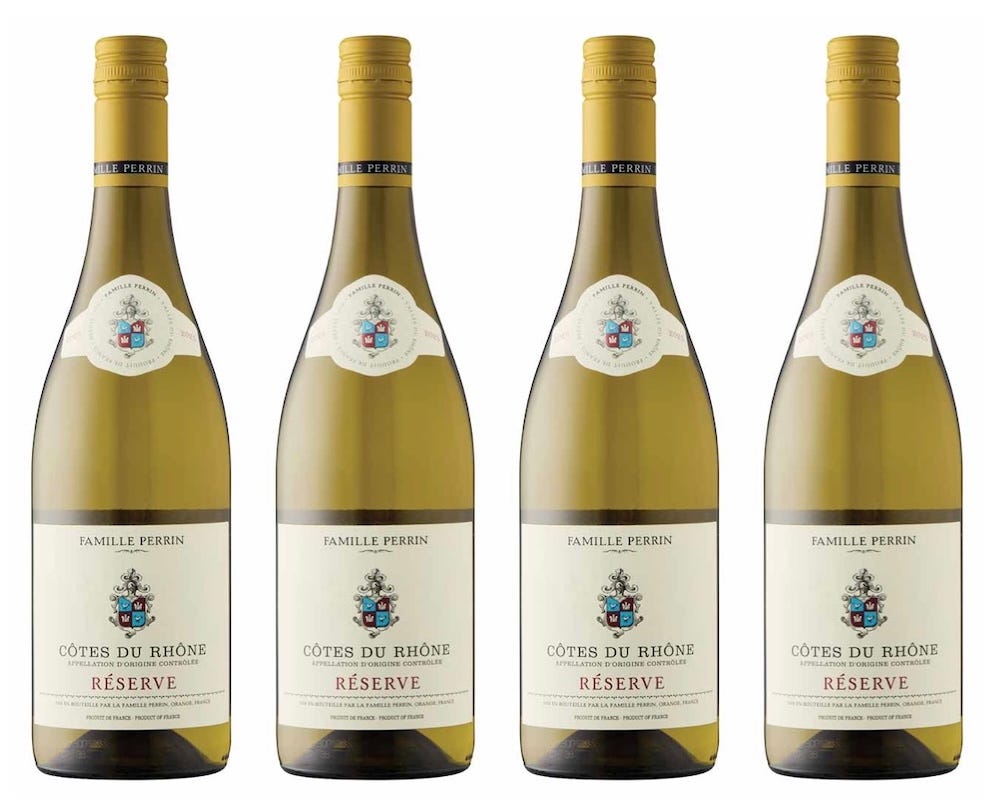
Famille Perrin Côtes du Rhône Réserve (Blanc) 2025
Price: $15.95
Channel: LCBO Vintages
Producer: Famille Perrin
Country: France
Region: Provence, Rhône Valley
Appellation: Côtes du Rhône
Grapes: Grenache Blanc, Marsanne, Roussanne, Viognier (percentages not disclosed)
Alcohol by Volume: 13%
Sugar Content: 2 grams per litre
The Perrin Family is both one of Châteauneuf-du-Pape’s most renown producers at Château de Beaucastel, and a highly successful seller of supermarket wine from the South of France with their La Vieille Ferme line, endearingly known as The Chicken Wine by it’s fans. The “Famille” line is a notch or two above the poultry one, but is still quite a bargain and one of the better sippers around for under $20 in the current Vintages release.
This classic bland of white Rhône grapes is a bit leaner than most in the category, with crisp lime citrus and stone fruit notes, but rounds out with a honeysuckle finish and a touch of white flower aromatics (presumably form the Viogner). This is a wine engineered for hot weather, and aims to refresh. I’d serve it before dinner with olives and dips.
https://www.lcbo.com/en/famille-perrin-r-cserve-c-tes-du-rh-ne-blanc-2020-499509
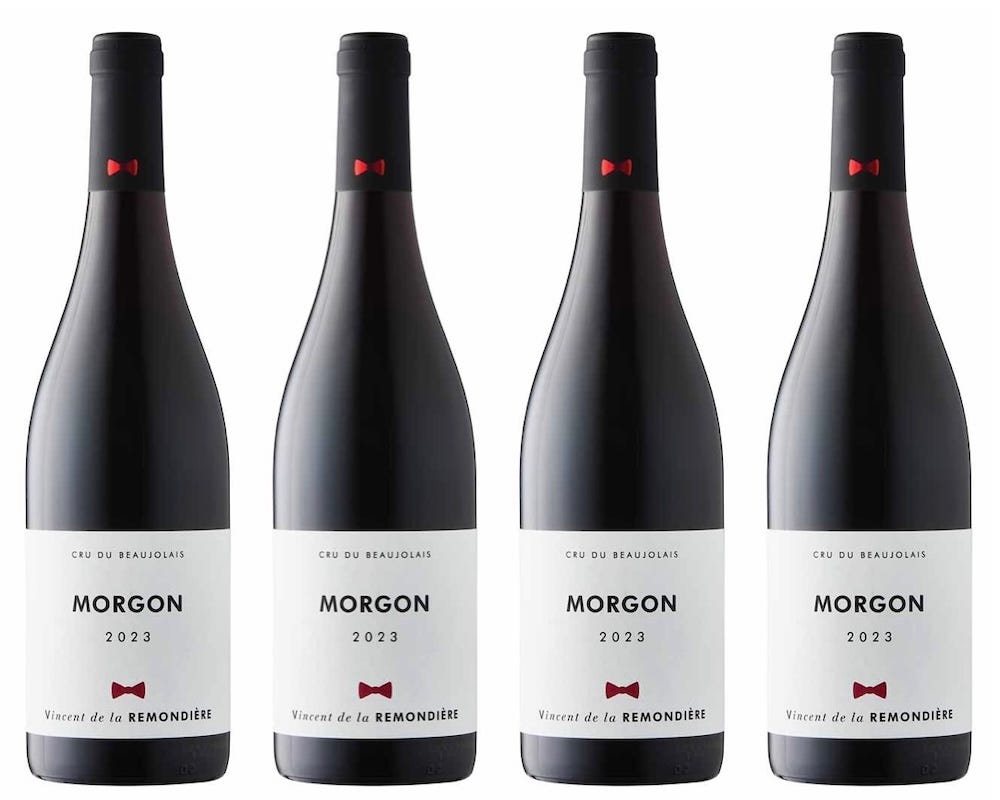
Vincent de la Remondière Morgon 2023
Price: $22.95
Channel: LCBO Vintages
Producer: Vincent de la Remondière
Country: France
Region: Beaujolais
Appellation: Morgon
Grapes: Gamay
Alcohol by Volume: 13%
Sugar Content: 3 grams per litre
$23 may now be considered democratic pricing for Cru Beaujolais. Perhaps it’s because the maker of this one is a Burgundy based negociant, that they’re keeping under $25, just to retain the hierarchy of the regions on the right bank of the Saône. In any event, this is a serious but not too serious, summer red wine full of juicy red fruit flavours like strawberries and raspberries, and then a slightly bitter cranberry finish. I served it to a Gamay skeptic, who I think I converted.
The Remondière Morgon is a classic barbecue wine in the sense that it’s versatile to pair with, or stand up to, whatever ends up on the grill.
https://www.lcbo.com/en/morgon-vincent-remondiere-2023-48638