Climate Control
Tasting Climate Change P1 | Finest Wines Known To This Week


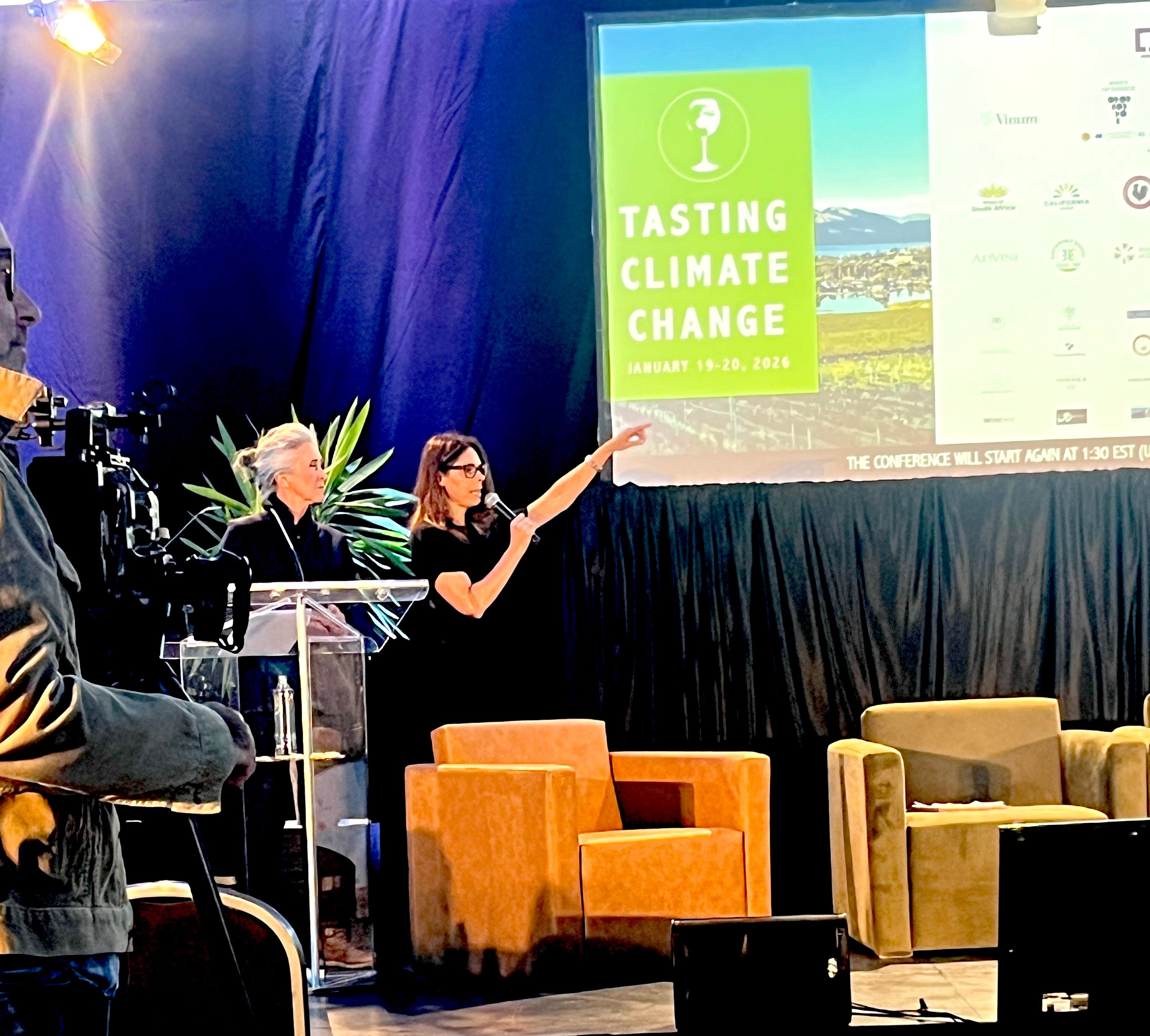
I was in Montreal last week for the fifth bi-annual Tasting Climate Change conference and tasting series. The gathering of 300 or so wine professionals, is organized and driven by the indomitable Michelle Bouffard (see this interview with her that explains why she started it 10 years ago). The main conference was held over Monday and Tuesday for January 19 and 20th, and featured a number of star speakers and panelists. I’ll write about that next week.
On the Sunday before the main conference a smaller group of participants attended a series of Masterclasses. These were wine tastings led and chosen by a panel or a particular expert that were meant to reflect the affect of climate change, and adaptation to it, on the taste of wine. Before we began, Bouffard explained that this was the original purpose of the event that became an international conference: to gather some knowledgeable people around a table to literally see what climate change tastes like.
If Michelle Bouffard is going to do something, she does it right. The wines were as delicious, and as interesting, as they were revelatory. And the speakers they came with were pretty good too. Here are some notes on what we tasting over the course of a sunny but cold day at the Bonsecours Market in Old Montreal.
1. Old Vines in the Context of Climate Change
Sarah Abbott MW, The Old Vine Conference
Maria Giovanna Migliore, Giacomo Borgogno & Figli
Rosa Kruger, Old Vine Project
Dr. Laura Catena, Catena Zapata & Luca Wines
Wines
1. Plaimont Saint-Mont Les Cépages Préservés 2020 (Gascony)
2. Wine & Soul Guru Branco 2024 (Douro)
3. Boekenhoutskloof Semillon 2022 (Franshhoek)
4. Borgogno Barolo Annuziata 2020 (Langhe)
5. Catena Zapata Malbec Argentino 2022 (Mendoza)
6. Yalumba Tri-Centenary Grenache 2023 (Barossa)
7. Bodegas Castaño Gémina Sin Sulfitos Añadidos 2021 (Jumilla)
Abbott was the old vines expert who moderated the old vines experts. She laid the groundwork by explaining that the “deep roots and woody reserves” of genetically diverse old grape vines hold the hope of resistance and adaptation to rising temperatures and climate chaos. These vines are literally the survivor stock.
It might have been a bit unfair to the other wines to have had to go up against the classic tar and roses Borgogno Barolo from the storied Annunziata cru of the great hill of La Morra. Nevermind, they all showed well, from the modest co-op made Gascon white to Dr. Catena’s old vines Malbec, and everything in between. Abbott and Kruger, the two scholars and cataloguers of old vines both pointed out that co-operatives their small plot growers were often the greatest keepers and maintainers of the the world’s old vine legacy.
2. The Chianti Classico toolkit, a holistic approach to climate change
Michaela Morris, DipWSET, Decanter
Wines (all Chianti Classico DOCG)
1. Montesecondo 2023
2. San Giusto a Rentenanno 2023
3. Monte Bernardi 2022
4. Ormanni Borro del Diavolo Riserva 2021
5. Castagnoli Terrazze 2019 Riserva 2019
6. I Fabbri Lamole Gran Selezione 2019
7. Istine Vigne Istine Gran Selezione 2019
8. San Felice Poggiorosso Gran Selezione 2020
Vancouverite Michaela Morris is the West Coast Chianti Classico expert analogue to my friend in Toronto, Michael Godel. As much as I enjoy Michael’s presentations and tastings of Chianti Classico it was great fun to have a fresh perspective on the wines that come from between Florence and Sienna. The style may vary, but the facts on the ground are the same: climate change has altered the value of Tuscan viticultural land.
How better a way to show how increasingly high elevation, or cooler northeast facing situation has become more and more in demand in the heart of Tuscany than tasting through eight Sangiovese stunners? Morris led us through a presentation of each wine, showing us how practices like regenerative farming and mixed field use, like maintaining olive trees in the vineyard, kept Chianti Classico’s fresh style. The proof being in the glass.
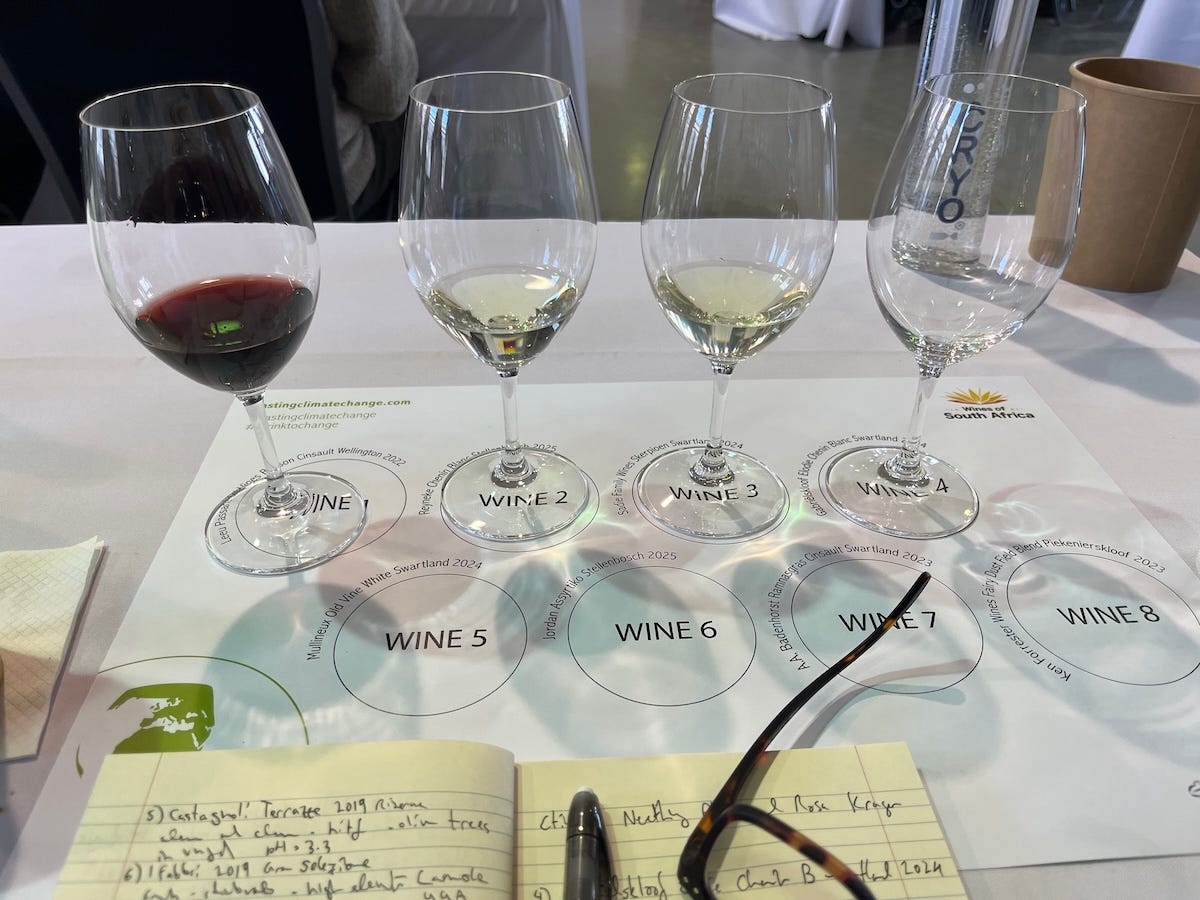
3. Learning from South Africa
Rosa Kruger, Old Vine Project
Etienne Neethling PhD, Ecole Supérieure d’Agriculture d’Angers
Wines
1. Leeu Passant Old Vines Basson Cinsault 2022 (Wellington)
2. Reyneke Chenin Blanc 2025 (Stellenbosch)
3. Sadie Family Skerpioen 2024 (Swartland)
4. Gabrielskloof Elodie Chenin Blanc 2024 (Swartland)
5. Mullineux Old Vine White 2024 (Swartland)
6. Jordan Assyrtiko Stellenbosch 2025 (Stellenbosch)
7. A.A. Badenhorst Ramnasgras Cinsault 2023 (Swartland)
8. Ken Forrester Fairy Dust Field Blend 2023 (Piekenierskloof)
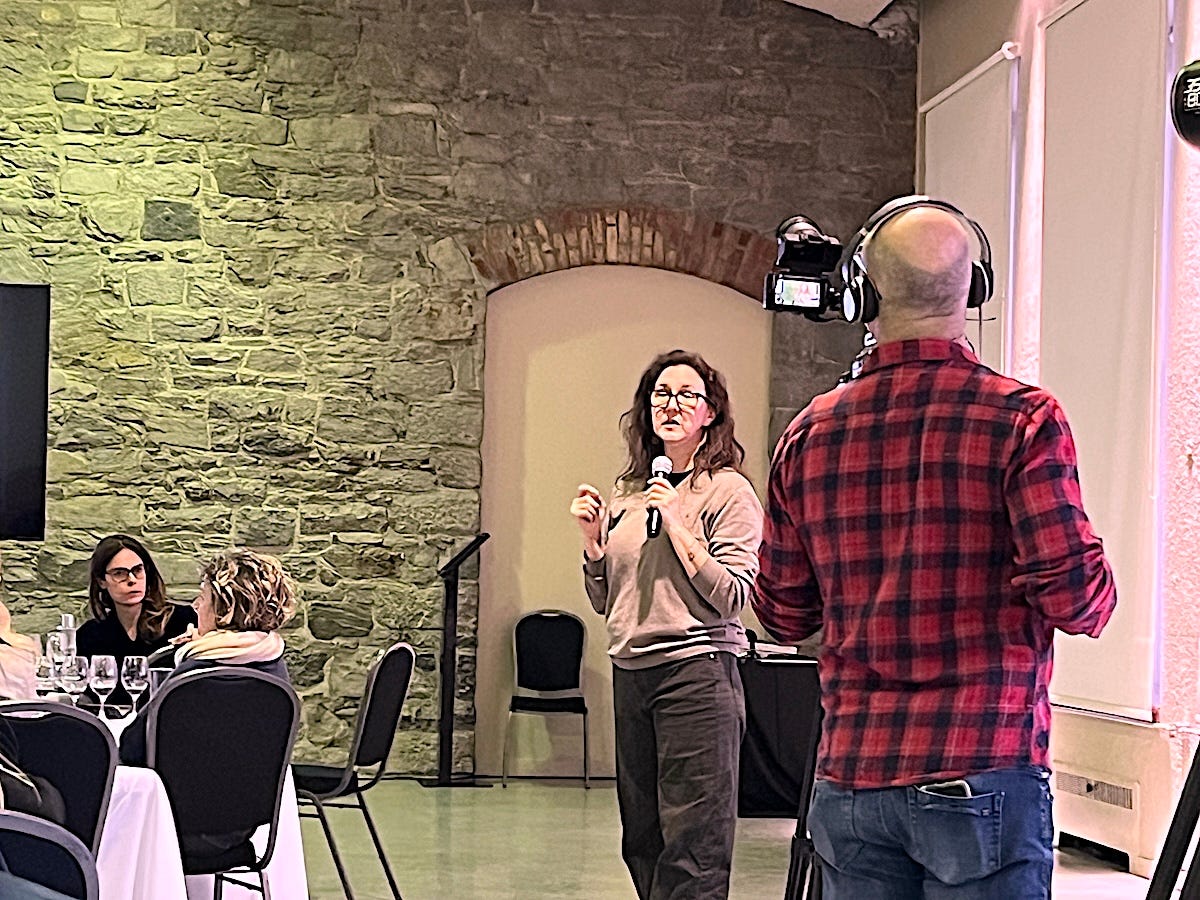
Kruger is a charmer, and Bouffard reminded us that we were lucky to have her in Canada: she agreed to this trip despite having forsworn travel. The principal effect of climate change in the Western Cape is drought. In 2018 the city of Cape Town very nearly ran out of water. Kruger makes her living by designing dry land wine farms; she knows how to grow grapes without irrigation.
Kruger’s flight of wines was assembled from a dream team of South African winemakers. Again, the strategy of presenting really delicious wines is an excellent one for driving home the importance of regenerative agriculture and good soil health, the latter two being a “no regrets strategy” in Kruger’s words.
The wines showed South Africa’s legacy of warm climate Mediterranean varieties, which continues with newer plantings by, for intance, Eben Sadie. Dr. Neethling, an Afrikaaner agronomist who teaches in France, pointed out that even the old cool climate variety of Chenin Blanc had adapted over hundreds of years to South Africa’s warm climate. If Chenin could adapt to warmer climes by way of genetic mutation, then perhaps other varieties can or will… if there’s time.
4. The Role of Viticulture in Climate Action
Elaine Chukan Brown, The Wines of California
Wines (all Napa Valley AVA)
1. Dominus Napanook Cabernet Sauvignon 2008
2. Dominus Napanook Cabernet Sauvignon 2018
3. Grgich Hills Cabernet Sauvignon 2016
4. Grgich Hills Cabernet Sauvignon 2020
5. Grgich Hills Cabernet Sauvignon 2022
6. Frog’s Leap Zinfandel 1997
The California Wine Institute maintains their offices in Canada, despite current market difficulties, to make sure we haven’t forgotten the wines of the Golden State and hope for more agreeable times to come. One way to make an indellible impression is to bring, open and pour six back vintage wines from legendary producers. Then, to really seal the deal, have them presented by en expert with intimate knowledge of them and the people who made them and literally wrote the book on California wine.
Elaine Chukan Brown didn’t bring the Napa Vallety wines to impress the crowd. She brought them, she explained, because each one was made in a particularly difficult vintage, aggravated by climate change. Her deliciously made point was that because Dominus, Grgich Hills and Frog’s Leap have always prioritized the health of their vineyards, including the welfare of the people who tend them, they were able to make exquisite wines when the going got tough.
Four lessons well tasted and learned in one day. Next: the conference itself.
WINE RECOMMENDATIONS
Please support my work and this newsletter by becoming a MJ Wine Box paid subscriber. Sign up today and receive 20% of the regular price, renewable for life. Or give a gift subscription, with the same discount. Click on the button below to redeem this offer.
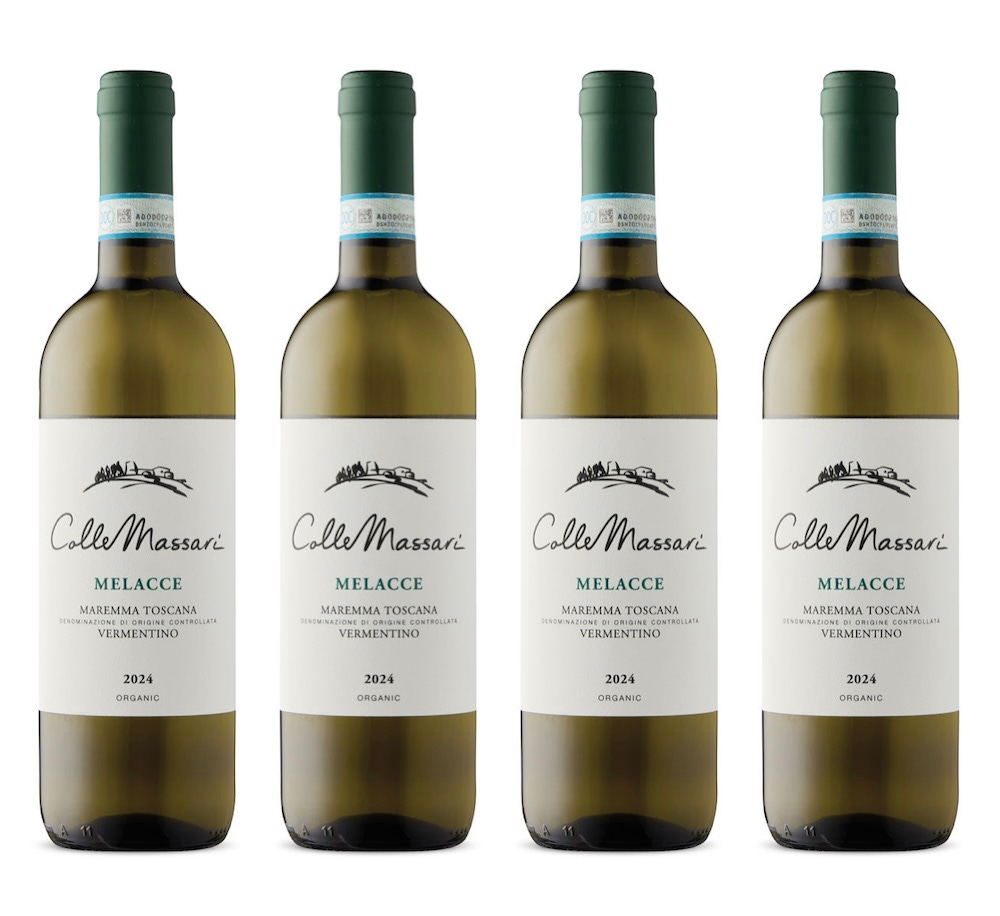
ColleMassari Melacce Vermentino 2024
Price: $19.95
Channel: LCBO Vintages
Producer: ColleMassari
Country: Italy
Region: Tuscany (Maremma)
Appellation: Maremma DOC
Grapes: Vermentino
Alcohol by Volume: 14%
Sugar Content: 2 grams per litre
The coastal region of Tuscany, the Maremma, is best known for its big ticket Super Tuscan reds, but here’s well priced zippy Mediterranean organic white that reminds us of warmer, sunnier months. Look for lemon and lime citrus and vibrant acidity. This is not a complicated wine, but rather pleasing in its simplicity.
Pair with soft cheese or potato chips.
https://www.lcbo.com/en/collemassari-melacce-vermentino-33416
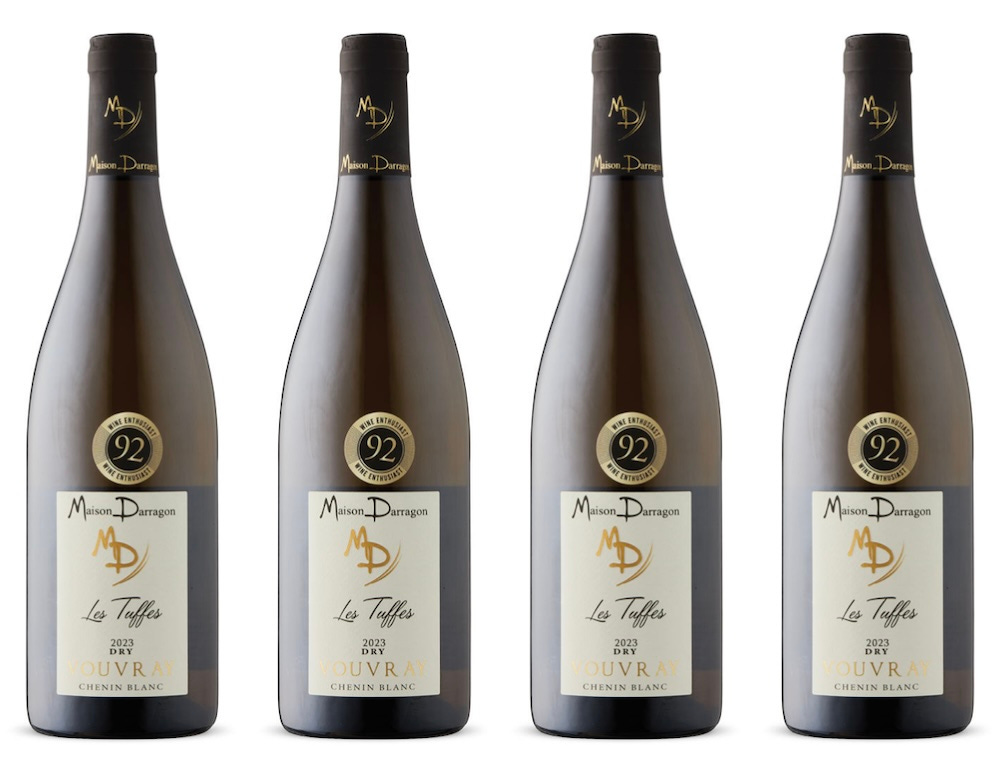
Darragon Les Tuffes Vouvray 2023
Price: $21.95
Channel: LCBO Vintages
Producer: Maison Darragon
Country: France
Region: Loire Valley (Vouvray)
Appellation: Vouvray Sec AOC
Grapes: Chenin Blanc
Alcohol by Volume: 12.5%
Sugar Content: 4 grams per litre
This is the second dry Loire Chenin to pop-up in the LCBO Vintages this month, and I dearly hope it’s a trend. The west end of the Loire Valley is full of delicious, full body, deeply fruity but dry Chenin Blanc wines, but they have been rarely seen on our retail shelves. For good dry Chenin, you either had to buy a case from an agency at $30 or more a bottle, or walk over to the South Africa section. Nothing wrong with either option, but it’s nice have the O.G. version available by the (affordable) bottle.
What’s nice about Darragon Les Tuffes is fruit that goes from apple to tropicals and that Chenin weight on the mid-palate that gives the wines made with a bit of time on the lees a fancy texture. It’s refreshing, but also somehow sustaining.
This is a wine to get through a leisurely winter lunch with friends. Soup with crusty bread and salad, followed by cheese. All to be savoured slowly.
https://www.lcbo.com/en/darragon-les-tuffes-dry-vouvray-chenin-blanc-47321
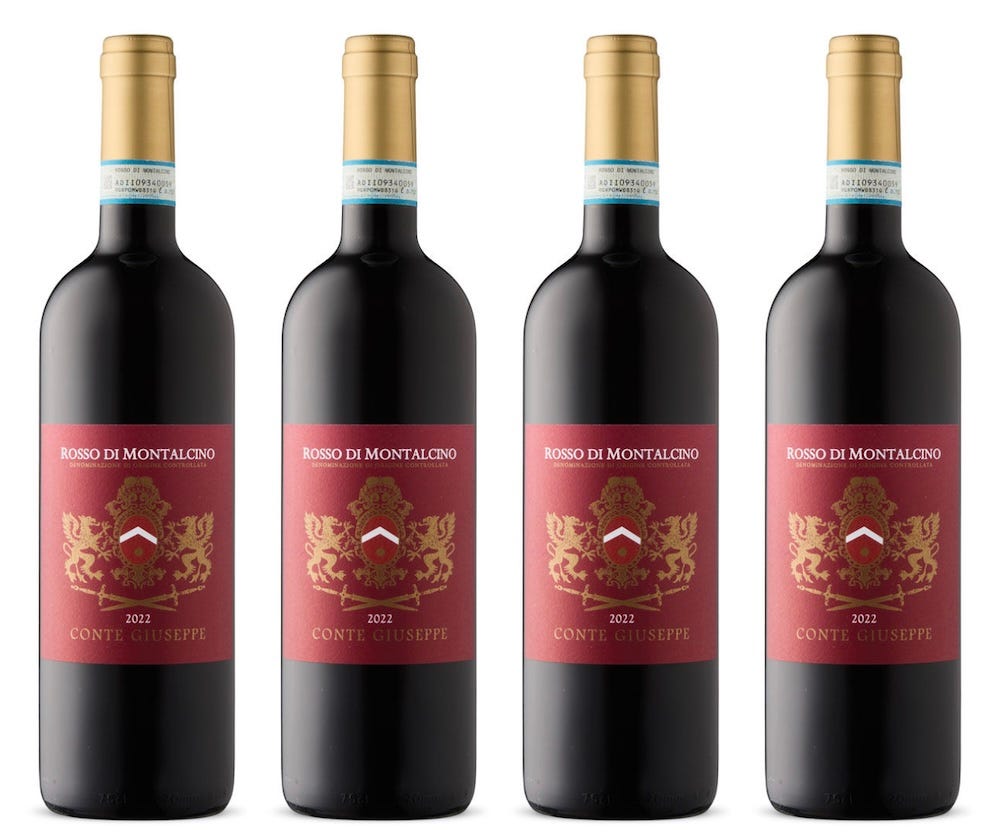
Conte Giuseppe Rosso di Montalcino 2022
Price: $29.95
Channel: LCBO Vintages
Producer: Cortonesi (I’m pretty sure)
Country: Italy
Region: Tuscany
Appellation: Rosso di Montalcino DOC
Grapes: Sangiovese (Brunello)
Alcohol by Volume: 14%
Sugar Content: 5 grams per litre
If you have $30 to spend on a bottle of red wine this weekend, I don’t know that you could do better at the LCBO than the Conte Giuseppe. This is Sangiovese reminiscent of Nebbiolo: crystal clear red cherry fruit, supported but not muddled by fine skin tannin. There are not a lot of deals out of Montalcino, but this is one of them.
I’d like to know more about the provenence of the Conte Giuseppe. The back label says it’s own thing, but there’s no website. And the cork is emblazoned with the wordmark of the Brunello making family Cortonesi. But the Cortonesi website, named after their flagship wine La Mannella makes no mention of Conte Giuseppe. It’s been a while since I’ve been to a tasting with Tommaso Cortonesi, so I can’t remember if he’s presented the Conte Giuseppe… his importer here represents both labels… and in the end AI says he’s the winemaker, so there you go.
This is a red wine prefectly suited for winter red wine things like anything warming in a red sauce or red meat braised in some other less expensive red wine.
https://www.lcbo.com/en/conte-giuseppe-rosso-di-montalcino-46563
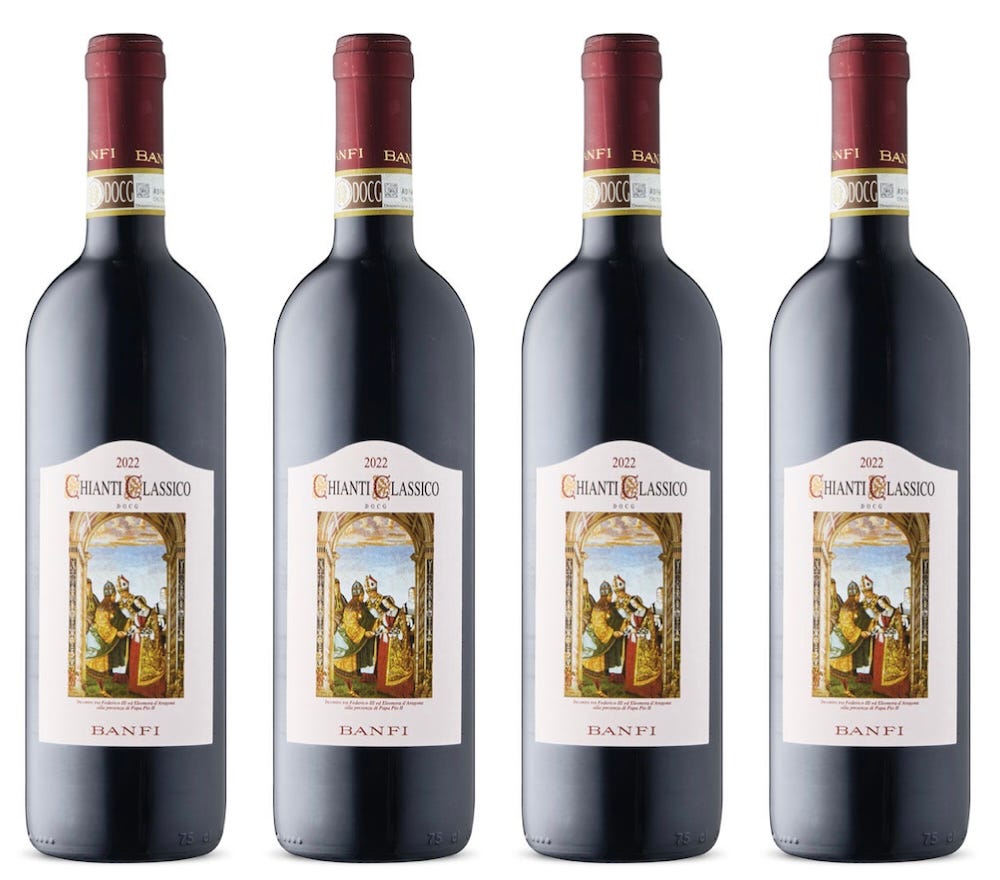
Banfi Chianti Classico 2022
Price: $19.95
Channel: LCBO Vintages
Producer: Banfi Wines
Country: Italy
Region: Tuscany
Appellation: Chianti Classico DOCG
Grapes: Sangiovese
Alcohol by Volume: 13.5%
Sugar Content: 3 grams per litre
The Italian-American Mariani family who took over, or created Banfi is credited as being one of, if not the, modernizers of the Montalcino region, taking it from mostly sweet white fizzy Moscato production to big, broody Brunello. Here is there production from down the road in Chianti Classico. It’s good to see a solid, well made Classico holding on to a $20 price point. This is getting rarer and rarer.
Not unlike the wine described above, the Banfi Chianti Classico shows clean and pure cherry Sangiovese character, and that finishes into grippy tannins. There is a touch of herbal macchia note that reminds us that we are in Tuscany, and as fine as it might be it’s still a Mediterranean wine.
It wants steak, or meatballs, or mushroom pasta.
https://www.lcbo.com/en/banfi-chianti-classico-2010-23028