Just Say Vino
Angular Assytirko | Pinot Savoyard

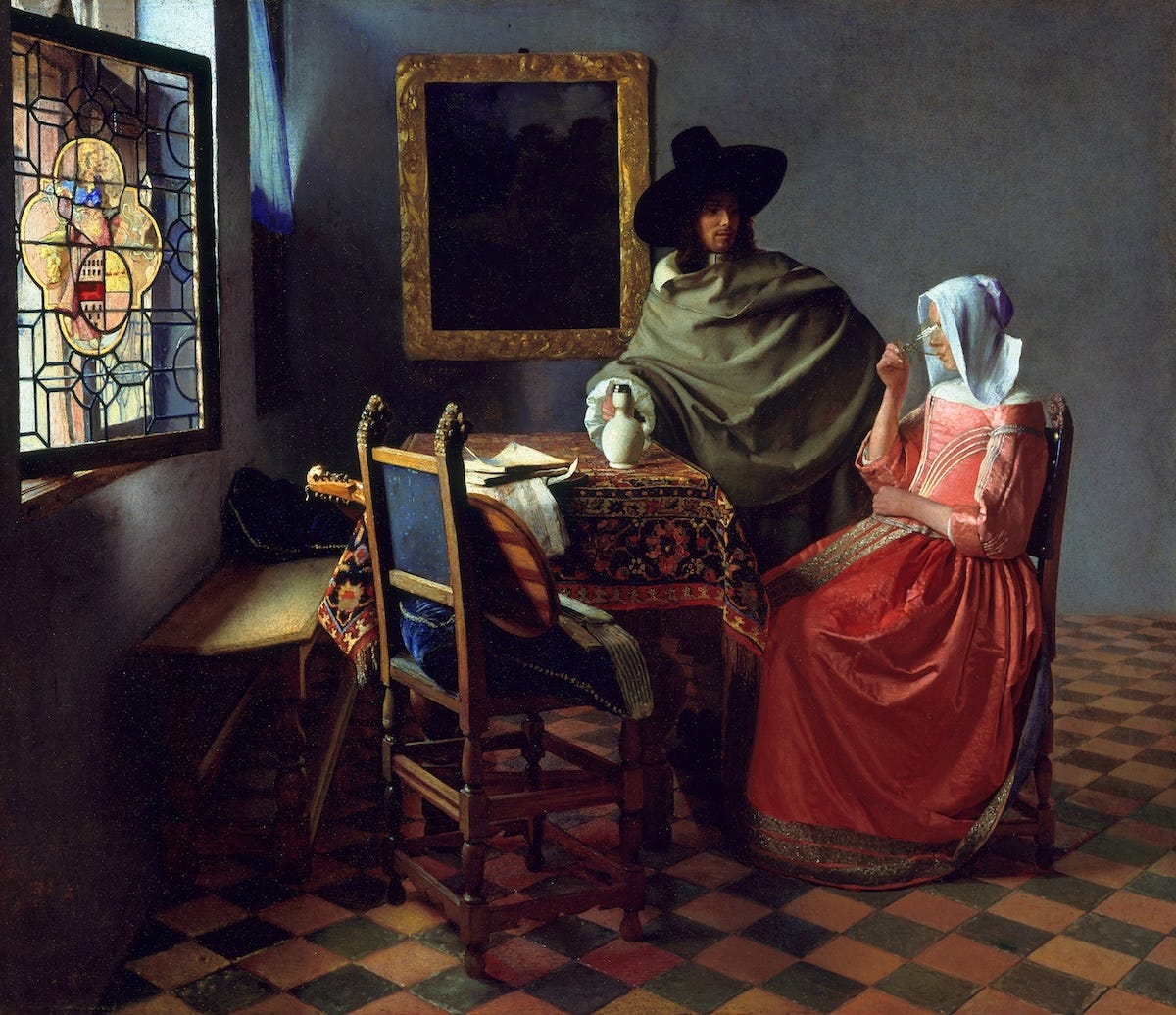
The Forces of the Universe want you and me to have a glass of wine at lunch. It just has to be a good one. It’s all coming together. Let me explain…
Over the last week or so there has been some buzz in my little wino journalist world since Felicity Carter’s February 19th post on her Substack Drinks Insider: ‘Why Does The New York Times Keep Telling You Alcohol Will Kill You?’ It’s an entertaining, informing and ultimately convincing read. A very reductive summary of the piece is that the New York Times publishes scary alcohol stories because people click on them.
Put another way, Carter explains that there doesn’t seem to be a great conspiracy to spread the anti-alcohol, Total Consumption Model and de-normalization message among the the media class editors at The New York Times (or The Globe and Mail, or The Guardian). It’s just that an aging and health conscious readership are drawn to wellness pieces, and especially alarming ones, which suit the agendas of a small group of writers. Carter posits her thesis:
What’s probably happening is that editors with access to the analytics can see that alcohol and health stories perform well, so they green light them when pitched. Individual interests and institutional incentives head in the same direction, and the result looks like a coordinated campaign, even when it isn’t.
Carter thinks this dynamic will play itself out, as irritating as it has been for we merry band of sensibly wine consuming sisters and brothers. A few days later, Joe Fattorini, on his eponymous Substack offered more encouraging news for the anti-new-prohibitionist set. Fattorini believes the de-normalization strategy of stigmatizing alcohol consumption like cigarettes will fail in a piece called ‘The good news: wine is NOT the new smoking.’
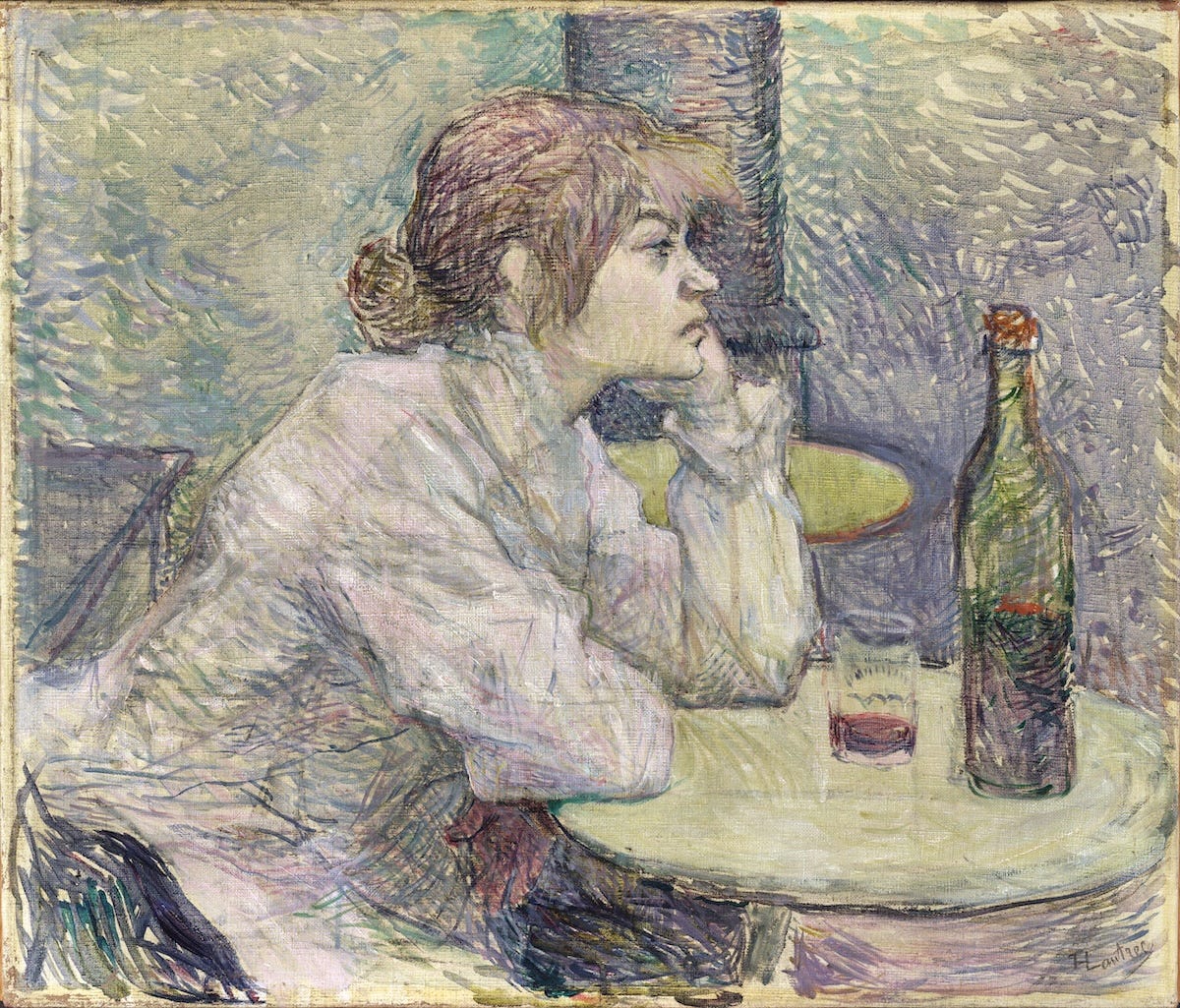
Another great read, Fattorini convincingly argues that the cessation of widespread smoking had less to do with health fears than status insecurity. Smokers knew it was bad for them for a long time before smoking became stigmatized. It was only once it became a marker of low status that people really began to quit in droves.
Pointing to the popular culture interest in the wine in the television series Succession, for instance, Fattorini posits that drinking wine is as glamorous as ever. He compares and contrasts the two indulgences:
…[Wine] isn’t smoking. Because while smoking has become associated with lower status groups and behaviour, the opposite is true for wine drinking. Which is (still) associated with higher educational attainment (Zhou et al., 2019), as well as being positively correlated with income.
Fattorini’s business is marketing wine, or helping people do it better. He leans into his thesis, and suggests it offers a strategy lagging wine sales. Promising to explore this theme in future posts, he writes:
…I’m going to explore an idea that will sting for many in the wine business. And I’m going to suggest that the the best way for wine to thrive in a changing world is to lean into - and not away from - wine’s status, mystique, and dare we say it… snobbery. Whatever that really means.
This turns out to be the prefect segue way to the third great read of a Substack post this week. It’s over on Jason Wilson’s Everyday Drinking, in a piece called ‘The Wine Industry’s Uneasy Relationship With ‘Funflation’’. Funflation refers to the high and climbing prices for experiences, like big name rock concerts, over goods; even luxury ones. That’s a clue about how it relates to wine (and status), but Wilson’s subtitle is a better one: ‘Why “de-mystifying” wine, and trying to sell young people cheap plonk, doesn’t work’.
Wilson, who has made this point in previous posts, explains that the decline global wine sales is on the lower end. Fine wine sales, of bottle $20 and up, are actually on the rise (at least in the US). Millennials, who are now well into their 30s and 40s, actually spend more on wine than any other age cohort.
If younger people aren’t drinking as much wine by volume than they used, it’s because they’re not drinking crappy wine. Why would they when there are so many more alternatives at a lower price point?
I have said this so many times that I feel like a broken record: The answer to the wine industry’s (mostly self-created) crisis is stop trying to convince young people to buy cheap, shitty wine. Focus on the higher end. Focus on quality. Focus on transparency, sustainability, good farming, and all the other things that younger generations say they want. Do better!
Indeed, we can all do better. Which brings us back to that glass of wine at lunch.
I realized last Sunday that the neo-prohibitionists had got to me. For all my calls for resistance to the neo-prohibiotinst movement, I had internalized the Total Consumption Model.
If you AI Google the Total Consumption Model, you might (I did) get this definition that comes from an NIH paper:
The Total Consumption Model (TCM) of alcohol is a public health theory stating that a society's total (or per capita) alcohol consumption is directly linked to the prevalence of heavy drinkers and related harms. It posits that when average consumption changes, drinking habits shift across all levels, including for heavy drinkers.
It anticipates a social engineering whereby if all the moderate and sensible drinkers stop drinking, the problem drinkers will too. It’s extended, naturally, to the individual. Drinking less is good. Not drinking is better. Every drink not drunk is a victory for society.
There is no question that there have been evenings when the general health of my own body, and whatever company had kept for the hour, would have been better served had I not opened another bottle of wine. Notwithstanding Margaret Thatcher, I will concede Society too may have been less harmed, to borrow the nomenclature of the neo-proh’s. But that’s a question of volume and frequency.
But, I had begun to imagine that substituting a glass of white wine for a sparkling water with a grilled cheese sandwich on Saturday was in some way a virtuous move. I am a healthy adult with the annual blood tests to show my ability to metabolize alcohol is competent. How the denial of 8 ounces of pleasure was going to improve my life, or society’s, is lost on me now.
So now, I remember Felicity Carter: the world is not turning Tee Total and the moral health panic over alcohol, like most internet fuelled phenomena, is overblown. I remember Joe Fattorini: having a glass of wine will not make me a pariah, and my knowledgeable enjoyment of it (even if I am striving to do it) is fine. And I remember Jason Wilson: have good glass of wine, and keep the people in business who make it, so you can live to drink another good glass of wine another day.
Please support my work and this newsletter by becoming a MJ Wine Box paid subscriber. Sign up today and receive 20% of the regular price, renewable for life. Or give a gift subscription, with the same discount. Click on the button below to redeem this offer.
WINE RECOMMENDATIONS
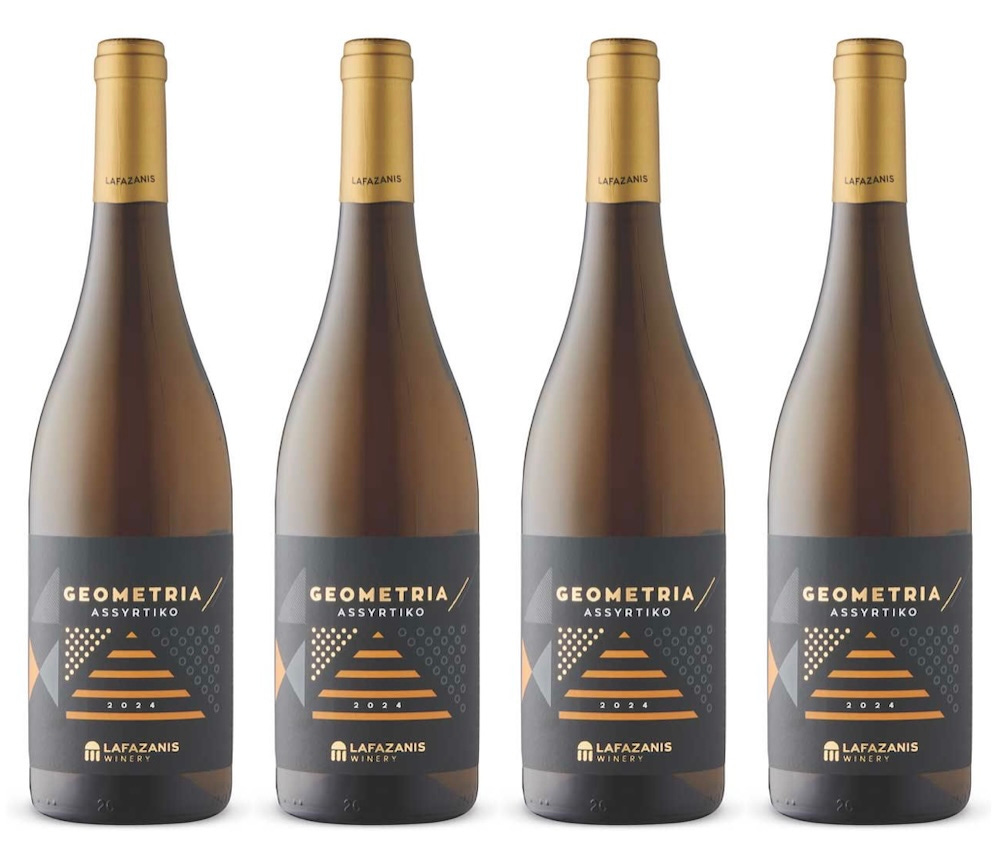
Lafazanis Geometria Assyrtiko 2024
Price: $22.95
Channel: LCBO Vintages
Producer: Emperia Group (Spyros Lafazanis)
Country: Greece
Region: Nemea, Peleponnese
Appellation: Peleponnese IGP
Grapes: Assyrtiko
Alcohol by Volume: 12.5%
Sugar Content: 2 grams per litre
This is an acid trip. Lot’s of it. Geometric indeed, the wine is positively angular. And yet, there’s a richness underlying it all, a depth from a couple of months on the lees, that comes after the first rush of lemon-lime tartness. It mellows into a few notes of tropicals (pineapple,guava) before bringing water to the mouth and the suggestion of another sip.
As I wrote a few weeks ago, Greek wine grapes are being heralded by some as the solution to warming wine regions. Here’s an excellent way to get on trend. Serve it at the beginning of the evening, or earlier, with soft cheese or maybe taramasalata.
https://www.lcbo.com/en/lafazanis-geometria-assyrtiko-2022-35723
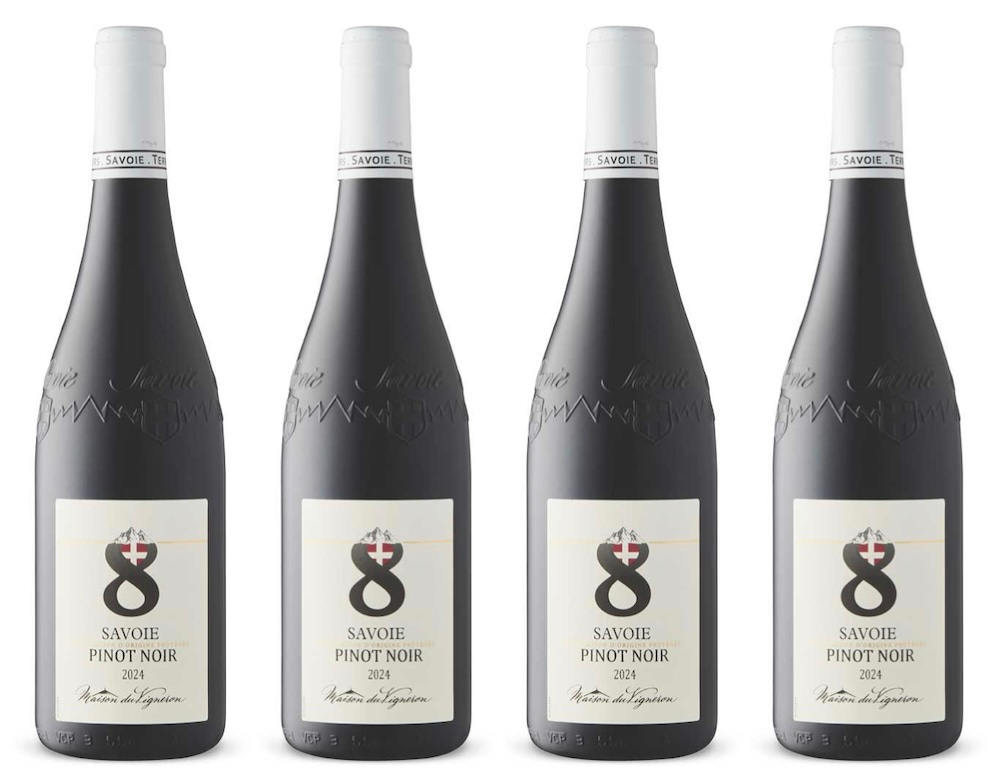
Maison du Vigneron Cuvée 8 Pinot Noir 2024
Price: $24.95
Channel: LCBO Vintages
Producer: Groupe Grands Chais de France
Country: France
Region: French Savoy
Appellation: Savoie AOP
Grapes: Pinot Noir
Alcohol by Volume: 12.5%
Sugar Content: 2 grams per litre
Is there a cool climate wine region that doesn’t grow Pinot Noir? I can’t think of one, nor a reason why any of them wouldn’t. This straight forward specimen from the French Alps is a case in point. It’s as clean and clear as the blue sky over Mont Blanc on a sunny day, and as fresh the mountain air.
Look for bright red fruit like cherry and cranberry, and just a glimpse of tannin holding all together. I can’t imagine a better red wine to go with Raclette, or cheese fondue. Anything warm and cheesy, really.
https://www.lcbo.com/en/les-grands-chais-de-france-cuvee-8-savoie-pinot-noir-2022-37180