
News From Clay Fields
Fabulous Falanghina | Luscious Lacrima

In my next life I think I’ll write about furniture. I’m partial to a good piece, and apparently the travel is pretty good. For instance the Salone del Mobile in Milan. That’s where Canada’s foremost office furniture maker, David Feldberg, founder of Teknion, solidified his love affair with wine, which ultimately led to the founding of one Canada’s foremost wineries in 2000, Stratus in Niagara-on-the-Lake.
I learnt this from David Felberg himself over a glass of 2025 Stratus Cabernet Franc Rosé recently at a press event for the soon to be opened Clayfield Hotel, in which he is a principal investor. The rosé paired well with a lunch prepared by Clayfield’s soon to be chef Joel LaBute, a son of Niagara who paid his dues at Scaramouche, Langdon Hall, and Araxi in Whistler, before joining the Ascari Group, which will handle kitchens and destination restaurant, Terrain. The hotel will be managed by Hyatt, who have designated it their second boutique Canadian wine country ‘Unbound’ property, after Spirit Ridge on Osoyoos Lake in B.C.

The Clayfield is part of a larger housing and walkable retail development being built across the Stone Road from the Stratus Winery, and is slated to open later this summer… stay tuned.
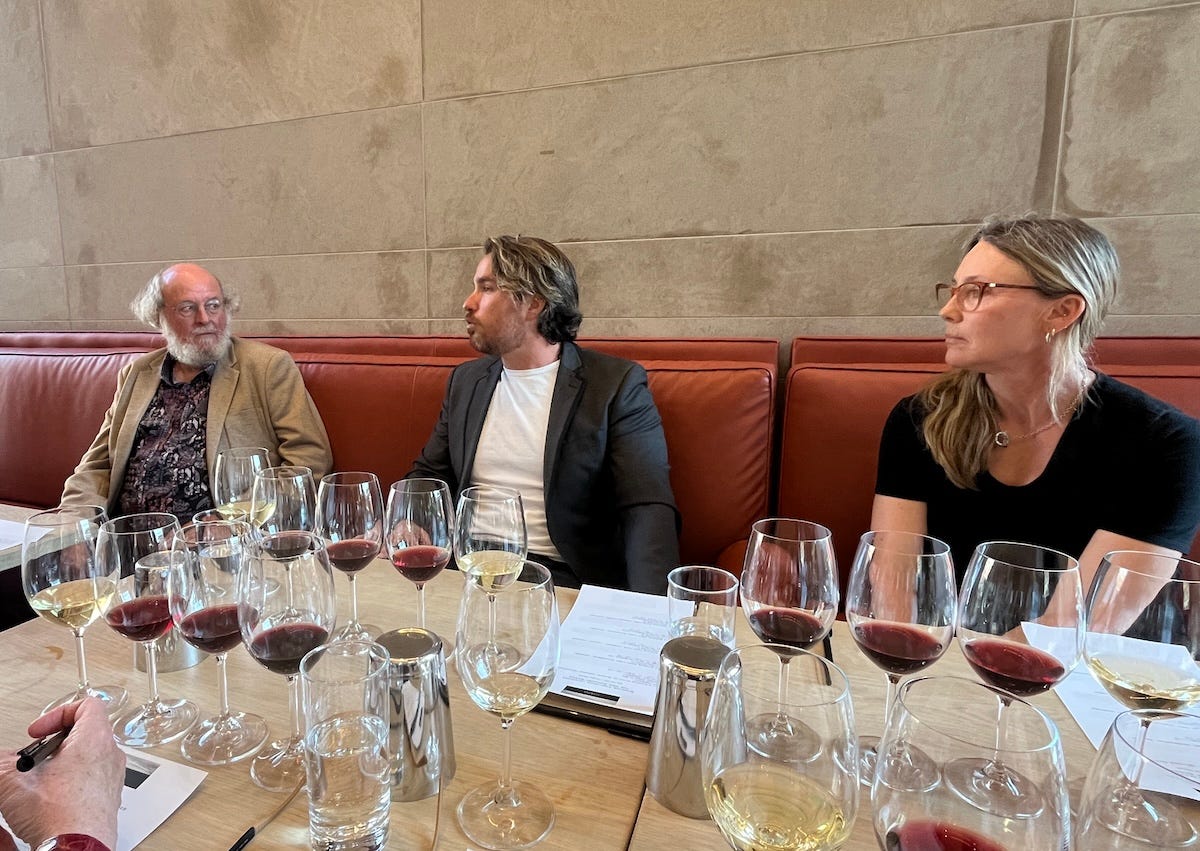
What’s being opened earlier this summer, or even earlier than this summer is Stratus’ series of Amphora wines. Last week, I sat down with winemakers J.L. Groux and Dean Stoyka to taste through the release. Joining a handful of wine journalist was Heather Laundry, whose eponymous vineyard in Niagara is considered among the region’s best, and who grew the 2024 Pinot Noir for the series. The tasting happened before a launch party held, appropriately enough, at the Gardiner Museum for ceramics.
Nothing happens quickly at Stratus; or nothing important to do with making wine, which is very much on purpose. Groux and Stoyka are known for their long hang times, leaving grapes on the vine long past when their neighbours have harvested. It took well over a decade for the first, and then three subsequent amphoras to be integrated into Stratus’ program. In that spirit we began with a glass of the 2017 Stratus Blanc de Blanc Méthode Traditionelle sparkling wine: 100% Chardonnay. Even with seven or eight years on the lees was crisp, refreshing and fruit forward: a wine built to last.
We tasted the 2023 Stratus White Label Chardonnay ‘Amphora’ first. It showed fresh citrus to tropical fruit and honeyed finish despite being bone dry. It had a terrific line of cool climate acidity, that Stoyka believes the clay amphora it spent 267 days sitting in encouraged.
Next the 2024 Stratus Pinot Noir Amphora ‘Laundry Vineyard’, which got 296 days in amphora. More black fruit than red, and calming mellow mid-palate tone… was I tasting the clay, or am I just highly suggestible. I’d like to come back to this wine in a few years, and continue to taste successive vintages from what Laundry told us was a unique small dome of a hill on her property.
I forgot that Stratus is one of the few growers of and wine makers of Sangiovese in Niagara until I was reminded when we tried the 2024 Stratus White Label Sangiovese ‘Amphora’. This is a really fun wine; it’s not going to be confused with Chianti Classico. It shows Niagara cool climate, with bright red fruit; cherries for sure but not confected. My notes have the word Niagara underlined, I think I meant it tasted of place.
We finished up with the 2023 Stratus White Label Cabernet Franc ‘Amphora’, which spent 600 days entombed in clay but rose up in the glass very much alive. Pure ripe black currant fruit; ripeness against fresh acidity. A wine that wants a steak. There is probably a wine writing rule about describing what something isn’t, but I’ll break it to say that this Cabernet Franc showed no hint of green or bell pepper pyrazene. This is why one goes to a Stratus wine: they wait for their fruit to ripen and three years later is all in the glass.
It was Stoyka a decade ago, who convinced his mentor and head winemaker at the time, Groux, to try an amphora after seeing some on a trip to Europe. And it’s Stoyka, now Head Winemaker who remains convinced that earthenware is the back to the future of wine making. The evidence does seem to be in the bottles.
TORONTO WINE CLUB

MJ Wine Box started as a COVID wine club, where my friends and neighbours pooled our money to buy cases of wine that you can’t buy at the LCBO and split them up into mixed cases. It was all about mitigating risk; if we ended up with a couple bottles we didn’t love, it was OK because there were other bottles in the box of wine to try. If we found something we liked, we could always order another case from the importing agent or Ontario winery.
I am going to do it again, and I am looking for about two dozen fellow wine enthusiasts to join me in a buyers club. They have to be MJ Wine Box subscribers and live in Toronto (so I can drop off the case of wine). My target is to find six different bottles of wine (two per case to make twelve) with an average price, including taxes and any delivery fees, of $35 a bottle. That’s $420 a case.
If this is of any interest, contact me directly. I’ll send you the full terms and conditions next week, and you can decide to join or not.
Just to be clear: this is a buyers club, and I am not going sell wine.
If you’re not already a paid subscriber to the MJ Wine Box Substack, consider upgrading now, and receive a discount of 20% for life.
WINE RECOMMENDATIONS
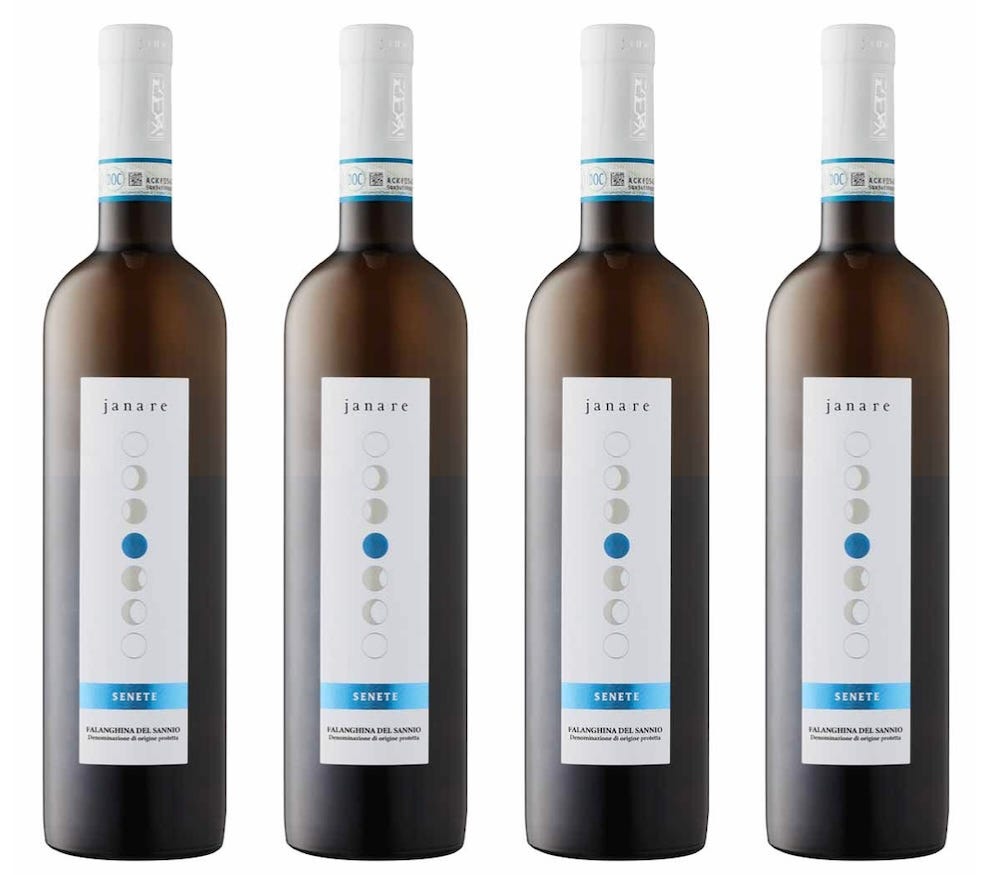
Janare Senete Flanghina del Sannio 2024
Price: $24.95
Channel: LCBO Vintages
Producer: La Guardinese
Country: Italy
Region: Campania
Appellation: Falanghina del Sannio DOC
Grapes: Falanghina
Alcohol by Volume: 13.5%
Sugar Content: 4 grams per litre
Here’s a big white wine from outside of Naples that wants a pasta with spring vegetables (the local asparagus before we truly get sick of it), good olive oil and a lot of pecorino grated on top. La Guardinese is a big co-op that hired a fancy oenologist a decade or more ago, and now their Falanghina is $10 more a bottle than it was when first came to the LCBO, but it’s still really good, probably better than ever.
Look for a cross of stone and citrus fruit, like peach with a spritz of lemon. It’s fresh and crisp like a proper Italian white, but it also has some weight to it. If you’re not making it to Amalfi this summer, you can at least drink like you were.
https://www.lcbo.com/en/janare-senete-falanghina-del-sannio-2017-556787
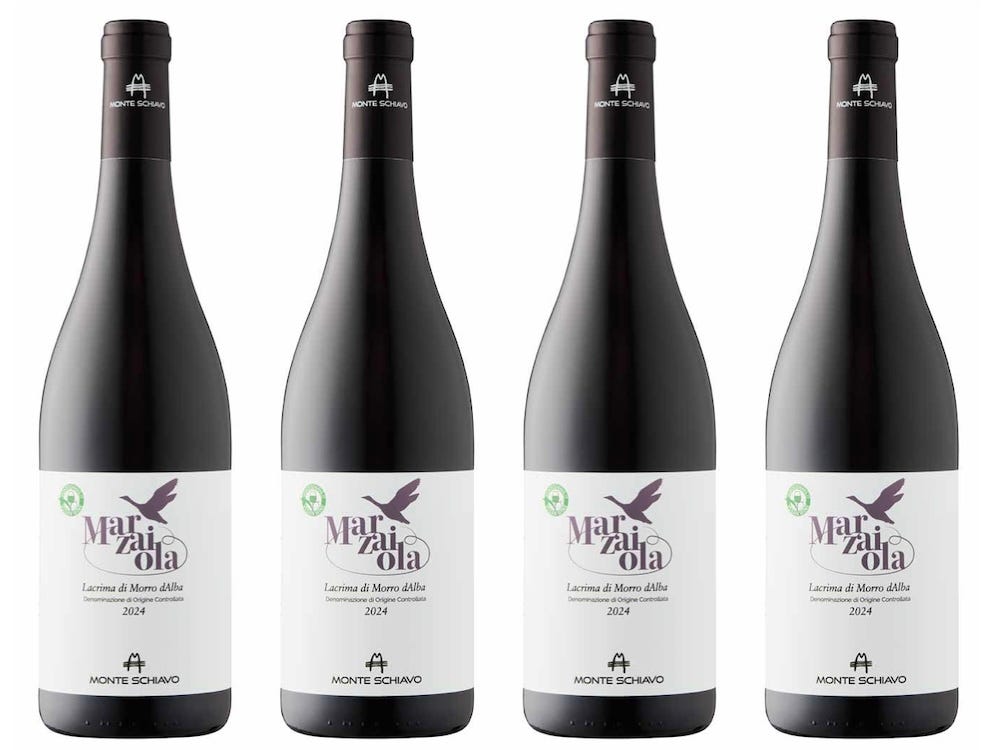
Marzaiola Lacrima di Morro d’Alba 2024
Price: $17.95
Channel: LCBO Vintages
Producer: Tenute Pieralisi
Country: Italy
Region: The Marche
Appellation: Lacrima di Morro d’Alba DOC
Grapes: Lacrima di Morro
Alcohol by Volume: 13%
Sugar Content: 7 grams per litre
I remember the first glass of Lacrima di Morro d’Alba I ever tasted. It must have been about 20 years ago because it was at the Jamie Kennedy Wine Bar and it was served to me by Jamie Drummond, who either congratulated me on my wise selection or suggested it himself. (This is academic, because he would have put it on the list anyway; my love for Lacrima is all his fault either way.)
I remember being proud of myself for deducing that Lacrima was the Italian word for tears, since it’s close to one of my favourite English words, lachrymose. And I remember being instantly taken by it floral character. That one was more about roses, this one, the Marzaiola, is more about violets.
There’s not a lot of Lacrima in the world, and it’s rare that it appears on the shelves of the LCBO. It’s hidden at my local retailer, among the wines of Southern Italy, which I don’t think really applies to the Marche, but I guess it had to go somewhere. Violets and a clear line of intense blackberry fruit dominate this very fine tannin wine. I am surprised that it has 7 grams per litre of residual sugar, because it drinks dry, and fresh with food friendly acidity. It will do the job of any red wine at dinner, but it’s true calling is to linger in the glass after the meal.
https://www.lcbo.com/en/marzaiola-lacrima-di-morro-d-alba-2024-50813